
Happy Feet, Happy Body
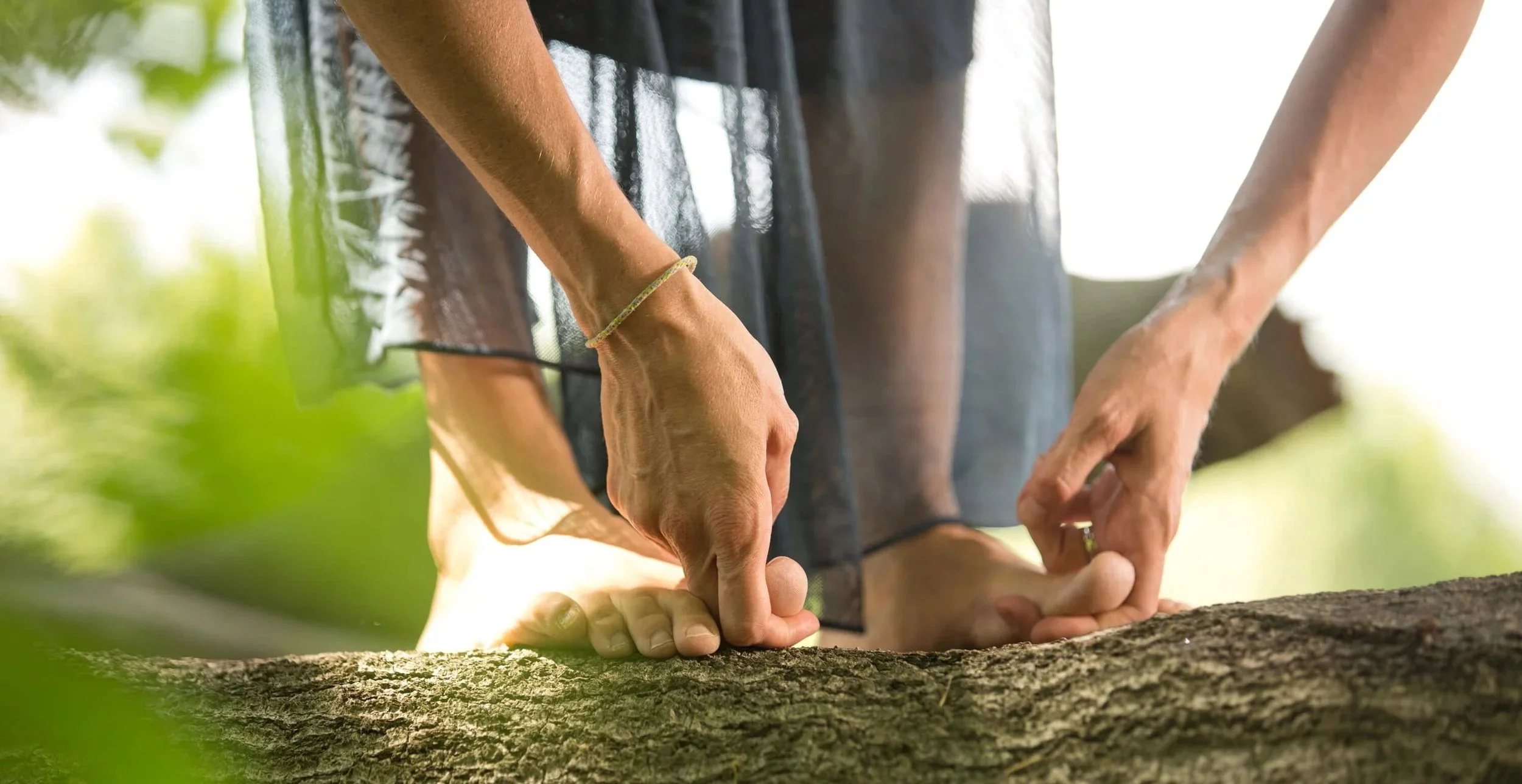
Is your structure built on a solid foundation?
If you've ever attended one of my classes, you'll know I have a mild obsession with the human foot. In my 20 years as a movement teacher, I'm still utterly mind-blown that two small, bendy, bony structures are able to hold up an entire body.
At this time of year, your feet might be on show more than usual. But apart from the occasional pedicure, how often do you actually pay attention to them?
Do you know where the weight sits in your feet when you're standing?
Does one foot feel more stable than the other?
Can your feet tolerate life without shoes, or do they wince at the prospect of walking on rough or uneven ground?
If you're not sure, we'll be exploring all of that in our classes at Move Well this month.
The Most Neglected Part of the Body
For most of us, our feet spend the majority of their lives in shoes — squeezed, elevated, cushioned and supported to such a degree that the foot's own muscles barely need to do their job.
And just like any structure that stops being used, things start to change.
Imagine wearing a cast on your wrist for most of your life. After just a few weeks of immobility, the muscles weaken, the joints stiffen and the whole area loses its ability to sense and respond to the world around it.
A rigid, narrow, heavily cushioned shoe can be a little like a cast for the foot.
So is your footwear working with your feet, or quietly working against them?
The good news? Feet are remarkably responsive. Given the right kind of movement and load, they adapt quickly, and the effects ripple upward through the whole body.
What's Actually in There?
Despite its size, the foot is a pretty complex masterpiece containing:
26 bones — a quarter of all the bones in the human body
33 joints — working together for incredible range and adaptability
100+ muscles, tendons and ligaments — coordinating load, balance and proprioception
The foot is shaped a little like a tripod:
Heel – designed for weight-bearing
Ball of the foot – generates force
Toes – provide balance and movement
The more space and spread we can create across that tripod, the more stable and supported everything above can become.
What Your Feet Reveal About the Rest of You
Exploring how someone's feet are organised and how they move can provide great insight into what's happening further up the chain.
Feet that roll inward often go hand in hand with thighs that rotate inward, changes in pelvic positioning and differences in lower back posture.
Feet that roll outward often mirror different movement patterns higher up the body.
Neither pattern is a life sentence.
But they are information.
And in our classes this month, we'll be using that information to get to know our bodies a little better.
These Feet Were Made for Walking
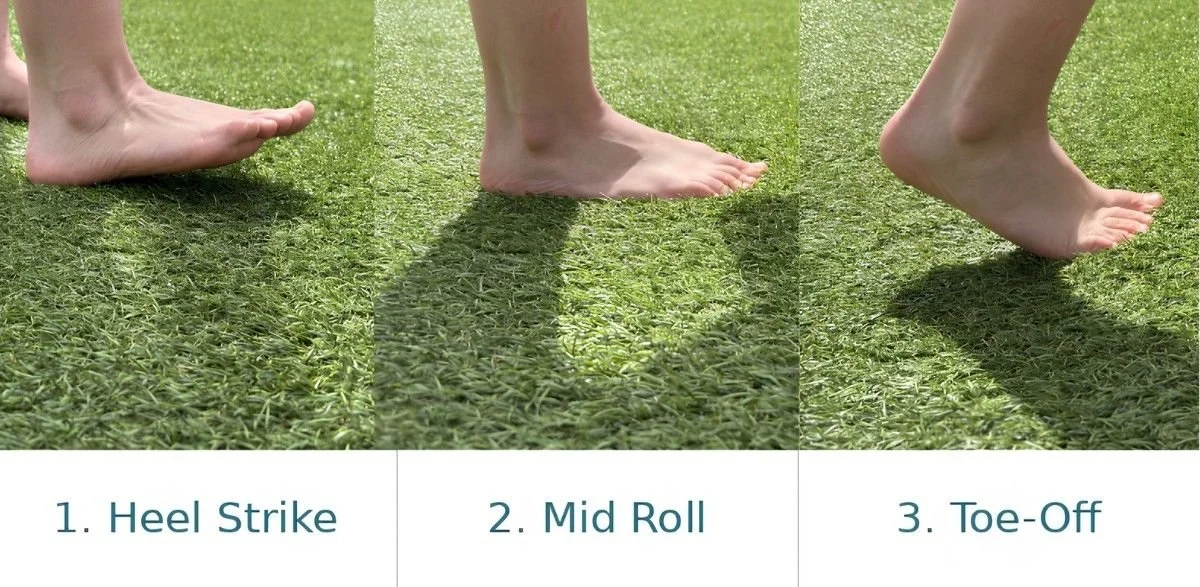
One of the most important phases of walking is something called the toe-off.
During toe-off, the big toe presses into the ground, helping propel the body forward.
That push-off creates a chain reaction through:
Calves
Hamstrings
Glutes
Pelvic floor
Every time we toe-off effectively, the pelvic floor gets a small lift and gentle stretch.
A workout just from walking… if it's all working as it should.
What a Happy, Functional Foot Can Do
A healthy foot requires adaptability, not just strength.
A healthy foot should be able to:
✓ Move in all directions
✓ Efficiently manage load
✓ Calibrate effort
✓ Support you against gravity without bracing or collapsing
Strong and mobile feet support a strong and mobile core, which in turn supports a body that's strong and mobile.
What We'll Be Doing This July
Every class this month will include dedicated footwork.
We'll be:
Moving the big toe independently
Mobilising the arches
Working on balance
Building awareness of where the foot is in space
Exploring how foot position influences the rest of the body
On the reformer, we'll be noticing how the positioning and movement of the foot affects how the whole body organises itself.
In our yoga classes and mat Pilates, we'll use our feet to support us through a range of positions, from lying to standing to balancing.
A tiny adjustment to foot position can help the entire body reorganise itself — and once you feel it, you'll start applying it everywhere.
Ready to Give Your Feet Some Attention?
So next time you kick your shoes off, have a look down.
Those two small structures are doing something extraordinary — and this month, we're going to give them the attention they deserve. 👣
These are the sorts of foundations we'll be exploring throughout July in our classes at Move Well Studio in Wetherby. Sometimes the smallest changes at ground level can make the biggest difference to how your whole body moves and feels.